
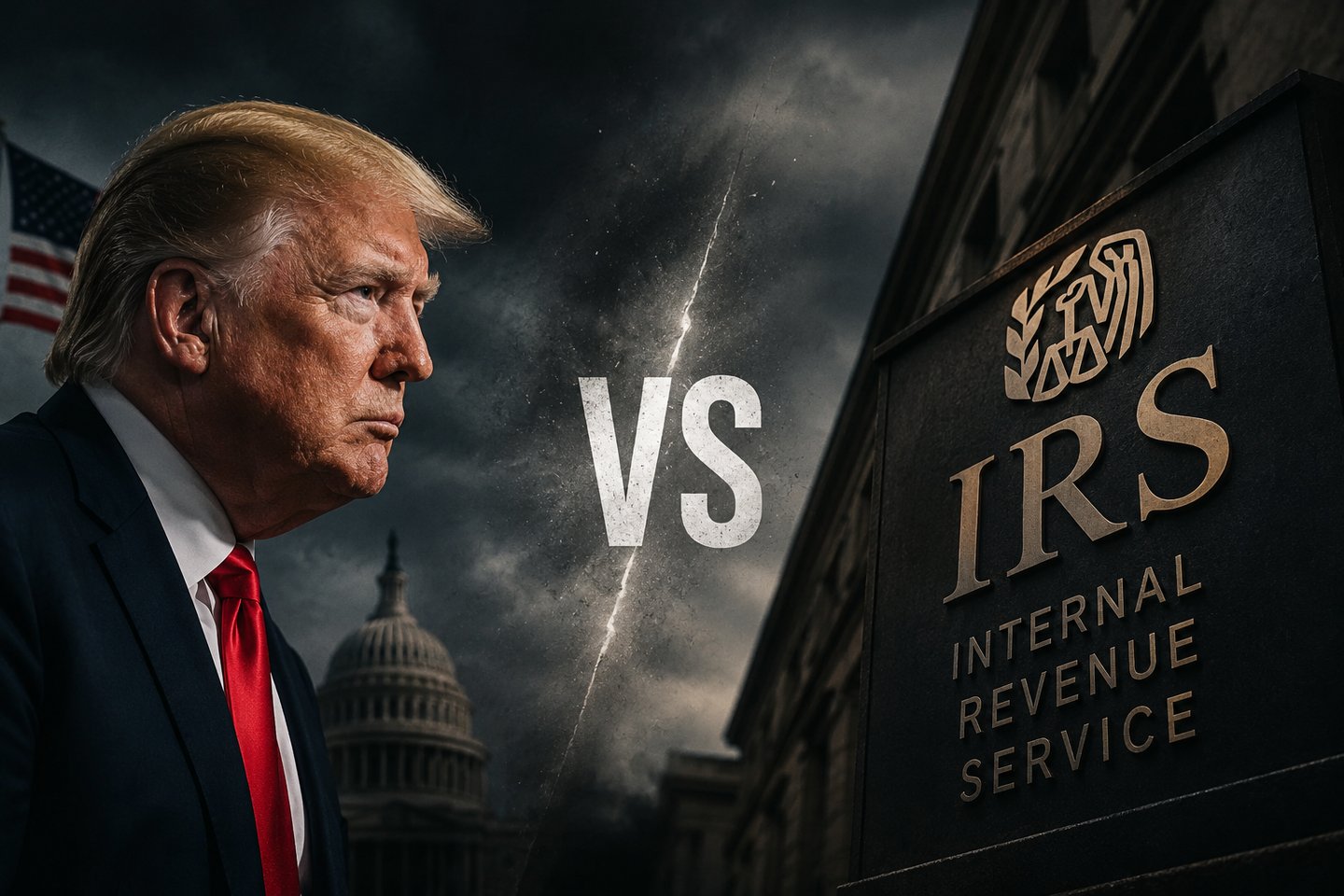
Trump vs. IRS: When the President Sued His Own Government — and What It Means for Your Business
The most controversial tax case of 2026 holds real lessons about tax privacy, audits, and why organized books aren't optional.
By Aurei Bookkeeping Innovators
6/10/20265 min read
What Actually Happened?
On January 29, 2026, President Donald Trump — joined by his sons Donald Jr. and Eric, and The Trump Organization — filed a federal lawsuit in Miami against the IRS and the U.S. Department of the Treasury. The amount claimed: at least $10 billion in damages.
The reason: between 2019 and 2020, an IRS contractor named Charles E. Littlejohn illegally accessed the tax returns of Trump and thousands of wealthy individuals, then leaked them to The New York Times and ProPublica. Littlejohn was arrested, pleaded guilty, and was sentenced to five years in prison.
On the surface, the case might seem straightforward: someone violated legally protected tax privacy, and those affected sued. But what followed was far more complex — and far more controversial.
The Problem Nobody Could Ignore: Trump Sued His Own Government
This is where the case becomes historically unprecedented. Trump wasn't just the plaintiff — he was also the President of the United States, meaning he was the head of the very government he was suing.
The Department of Justice (DOJ), which normally defends the IRS in litigation, was under the control of the Trump administration. In practice, Trump was on both sides of the table: the one filing the lawsuit and the one overseeing the defendants.
Key fact: 93 members of Congress filed a legal brief on the same day as the settlement, arguing that the case was an unconstitutional "collusive" action. Never in U.S. history has a sitting president sought monetary compensation from the government he leads.
Despite the objections, the lawsuit moved forward — and was resolved before a judge could examine whether it was legally valid.
The Settlement: May 18, 2026
On May 18, 2026, two days before a court-mandated deadline, Trump voluntarily withdrew the lawsuit. That same day, the DOJ announced the creation of the "Anti-Weaponization Fund."
What Is the Anti-Weaponization Fund?
A $1.776 billion taxpayer-funded pool designed to compensate people who claim they were victims of "lawfare" — the alleged political use of the legal system against individuals.
The fund will be overseen by a five-member commission appointed by the Attorney General. It could include payouts — and even formal apologies — to Trump allies who faced criminal charges under previous administrations.
What the DOJ says: According to the official settlement, the plaintiffs (Trump and his family) will receive a formal apology but no direct monetary payment. However, the most controversial clause was quietly added the following day: the IRS is "forever barred and precluded" from pursuing any current tax claims against the president, his family, or his businesses.
Why Did This Settlement Spark So Much Debate?
There are very different views on this case depending on the angle:
In defense of the settlement: The government argues that Littlejohn's leak was real, that it violated Section 6103 of the Tax Code — which prohibits unauthorized disclosure of tax information — and that affected taxpayers deserve a legitimate process for redress.
Against the settlement: Critics point out that the case was resolved before a judge could evaluate its legal validity, that the fund could benefit individuals convicted in connection with the January 6th Capitol attack, and that using public funds for this purpose sets an unprecedented precedent.
The core legal point: Section 6103 of the Internal Revenue Code (IRC) protects the confidentiality of every taxpayer's tax information — not just presidents. The violation committed by Littlejohn was real and supported by solid legal precedent.
Regardless of political position, the case raises fundamental questions about tax privacy, government conflicts of interest, and the limits of the American tax system.
3 Direct Lessons for Business Owners
Beyond politics, Trump vs. IRS has real, practical implications for any person or business in the United States.
Lesson 1: Your Tax Information Is Protected by Law — But You Have Responsibilities Too
Section 6103 of the IRC explicitly prohibits the unauthorized disclosure of your tax returns. That protection applies to everyone: individuals, LLCs, corporations, and partnerships.
However, that protection only works if your returns accurately reflect reality. If there are discrepancies between your records and what you report, the law doesn't protect you — it exposes you. The question isn't whether the IRS can see your numbers. It's whether your numbers tell the right story.
Lesson 2: The IRS Can Audit Up to 6 Years Back — and Disorganized Books Are Your Biggest Risk
One reason the "permanent audit ban" clause generated so much controversy is precisely that the IRS normally has the authority to review prior tax years. In cases of fraud, there is no time limit.
For a business owner, this means the books you keep today are the evidence of tomorrow. Clean, consistent, well-documented bookkeeping isn't bureaucracy — it's your first line of defense against any review, now or in the future.
Lesson 3: Mixing Personal and Business Finances Can Cost You Far More Than Money
Part of what made the Trump case so complicated was the entanglement of entities: the president as an individual, his sons as individuals, and the Trump Organization as a corporate entity — all with intertwined financial interests.
For a small business owner, this translates into one simple but critical rule: your LLC is a separate entity. Separate accounts. Separate expenses. Separate books. When that line blurs, your tax risk — and legal exposure — multiplies.
Case Timeline
2019–2020 — IRS contractor Charles Littlejohn illegally accesses and leaks Trump's tax returns and those of thousands of wealthy individuals to The New York Times and ProPublica.
October 2023 — Littlejohn pleads guilty to unauthorized disclosure of tax return information.
2024 — Littlejohn is sentenced to five years in prison. In a deposition, he admits to sharing Trump-related information with ProPublica.
January 29, 2026 — Trump, Donald Jr., Eric Trump, and the Trump Organization file a $10 billion lawsuit against the IRS and the Treasury in the Southern District of Florida (Case No. 1:26-cv-20609).
May 18, 2026 — Trump voluntarily dismisses the lawsuit. The DOJ announces the creation of the $1.776 billion Anti-Weaponization Fund.
May 19, 2026 — The DOJ quietly adds a clause permanently barring the IRS from auditing Trump, his family, or his businesses.
June 2026 — The case continues to be debated in Congress and across the legal community.
Conclusion: A Story That Isn't Over
Trump vs. IRS will be debated by lawyers, legislators, and tax experts for years to come. There are legitimate positions on both sides of the political debate, and this blog doesn't take a side — that's not our job.
Our job is to help you understand the American tax system so your business is protected, documented, and ready for whatever comes next.
What this case makes clear is that the IRS, tax privacy, and financial documentation matter — for the president and the owner of the corner bakery alike.
When was the last time you did a thorough review of your books?
If you don't have a clear answer, that's exactly when it's time to act.
Are Your Books Ready for a Review?
At Aurei Bookkeeping Innovators, we help business owners keep their finances organized, clear, and protected — all year long.
Send REVIEW via DM on Instagram, or reach out directly:
📞 (305) 306-3981
📲 @AureiBooks
Clarity. Strategy. Financial Confidence.
© 2026 Aurei Bookkeeping Innovators LLC. All rights reserved. This article is for educational purposes only and does not constitute legal or tax advice. For your specific situation, consult a qualified professional.
Explore
AureiBooks@gmail.com
© 2026. All rights reserved.


AureiBooks
Strategic bookkeeping and advisory for South Florida small businesses and real estate professionals.
HABLAMOS ESPAÑOL · PROUDLY SERVING MIAMI & SOUTH FLORIDA
Connect:
Email:
Phone:
(305) 306-3981
Address:
20200 W Dixie Hwy, Suite 902
Aventura, FL 33180, United States